
Care & services
Non-Surgical Spinal Decompression
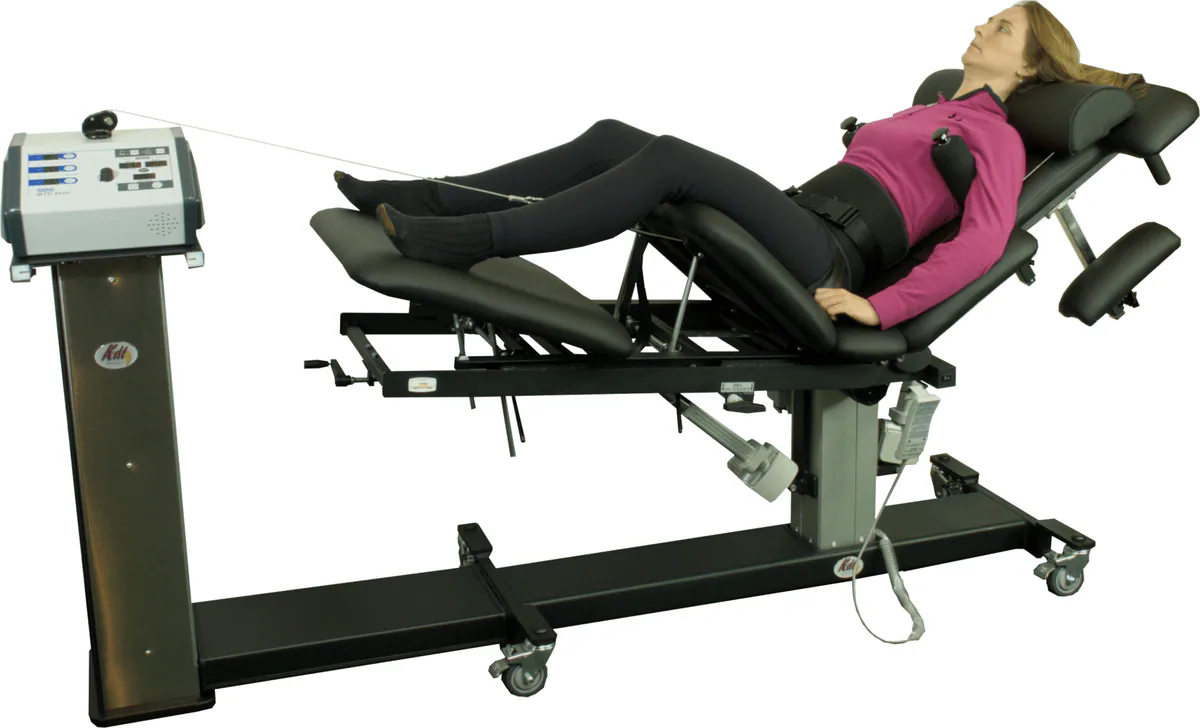
Non-surgical spinal decompression is a motorized form of traction that gently stretches a selected area of the spine. Ocean Chiropractic Center may consider it for some people with back pain, neck pain, or radiating nerve symptoms after an evaluation. The goal is to address mechanical loading around spinal discs and nerves rather than simply mask symptoms.
A scan that mentions a bulging or herniated disc, degeneration, or stenosis does not automatically make someone a candidate. A careful diagnosis, candidacy review, and discussion of expected benefits, limits, and alternatives come first.
PurposeWhat the service is intended to address
FitHow candidacy and alternatives are discussed
ProcessWhat an appointment may involve
SafetyLimits, precautions, and questions
What decompression therapy is designed to do
During treatment, a specialized table applies and releases controlled traction. One proposed mechanism is a temporary reduction in pressure inside a spinal disc—often described as negative intra-discal pressure or a partial vacuum. In an appropriate case, the treatment is intended to:
- Reduce pressure within the disc. The proposed aim is to reduce compressive loading and encourage bulging or herniated disc material away from an irritated nerve.
- Support disc hydration and nutrient movement. Changes in pressure are intended to help water, oxygen, and nutrient-containing fluid move through discs, which do not have a direct blood supply in the same way as many other tissues.
- Relieve nerve irritation or compression. Creating more space around sensitive nerve structures may help with symptoms such as sciatica, radiating arm or leg pain, numbness, or tingling.
- Offer a non-invasive, drug-free option. When clinically appropriate, decompression may be one part of conservative care and may help some patients reduce reliance on medication or delay more invasive treatment.
- Restore mobility and function. Reducing mechanical strain and muscle guarding may make movement and participation in daily activity or physical rehabilitation more comfortable.
These are treatment goals and proposed mechanisms, not guaranteed biological changes or outcomes. Current evidence does not establish that traction reliably retracts a herniated disc, rehydrates a disc, eliminates medication, or prevents surgery. It should not delay medication, injections, specialist care, or surgery when those are medically indicated.
“Spinal decompression” is used for different tables and protocols. Before starting, ask which manufacturer and model will be used, how the protocol relates to your diagnosis, which contraindications and safeguards apply, what would stop a session, how progress will be measured, and what the total expected costs and alternatives are.
What the treatment generally involves
Mechanical traction applies a controlled pulling force to part of the spine. Depending on the equipment, you may lie on a table while a harness or other positioning system applies and releases tension according to a selected protocol. Positioning, force, duration, expected sensations, and reasons to stop should be explained before the session.
“Non-surgical” describes the procedure; it does not mean risk-free or medically preferable. Some people may not be candidates because of fracture risk, instability, certain bone or neurologic conditions, pregnancy, implanted hardware, recent surgery, or other factors. The complete contraindication list depends on the specific table’s instructions and an individual clinical assessment.
How a decision should be made
-
Clarify the symptom pattern
The clinician should ask about onset, location, radiating symptoms, numbness, weakness, aggravating movements, prior diagnoses, imaging, procedures, and current treatment. Bring available reports if they are relevant; an image finding alone does not determine the source of pain.
-
Screen for a different or urgent cause
An examination may consider motion, strength, sensation, reflexes, and signs that point to a nerve or other structure. New loss of bowel or bladder control, numbness around the groin or saddle area, or rapidly worsening limb weakness with spinal symptoms calls for immediate emergency-department assessment. Call 911 for an emergency. Significant trauma, fever with severe spinal pain, or other emergency features also require prompt medical assessment.
-
Compare reasonable options
For many back-pain presentations, education, staying active as tolerated, a structured exercise program, and selected manual or medical approaches may be considered. The right combination depends on the diagnosis, patient preferences, risks, access, and prior response.
-
Agree on a limited trial, if appropriate
If the specific equipment and clinical findings support decompression, the plan should state the functional goal, how response will be tracked, when it will be reviewed, and what would prompt a change or referral. Frequency should not be sold as a universal package.
Evidence deserves a candid conversation
The World Health Organization’s guideline for adults with chronic primary low back pain advises against routinely offering traction in most contexts because its evidence review did not establish a favorable balance of benefits and harms. That population and recommendation may not answer every diagnosis-specific question, but they are important context for informed consent.
The same WHO guideline emphasizes person-centered, coordinated care and often a combination of strategies rather than reliance on one passive modality. A patient comparing options can review chiropractic care, the back pain page, and information about disc injuries. A surgical or specialist opinion remains appropriate when clinically indicated.
Common questions
Will decompression put a disc back in place?
This page does not make that claim. Imaging findings, symptoms, and treatment response do not have a simple one-to-one relationship.
How many visits will I need?
That cannot be predicted responsibly before assessment. Any trial should have a review point rather than a guaranteed package or outcome.
Can I use decompression after surgery?
Prior surgery changes the candidacy decision. Obtain clearance and records from the treating surgeon when appropriate; decompression should not be presumed suitable.
Is this a way to avoid surgery?
It should not be marketed that way. Conservative care may be discussed when appropriate, but indicated surgical evaluation should not be delayed or discouraged.